Native American Embroidery Design Review
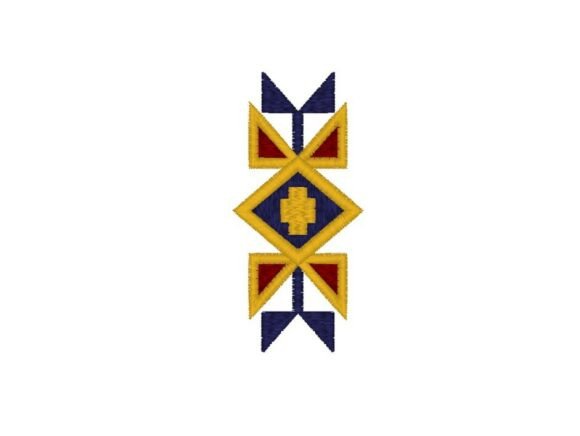
As a designer who has spent years navigating the fine line between artistic vision and machine limitations, I approach every new machine embroidery design with a critical eye. When I first loaded the Native American Embroidery Design onto my hoop, I wasn't just looking for a pretty picture; I was evaluating a potential asset for my small business inventory. This specific pattern falls squarely into the Shapes category, but it carries a weight and cultural resonance that demands careful handling. The description promises bold geometric symmetry featuring navy, gold, and deep red triangles and diamonds arranged in a totem, and my initial impression is that this embroidery file delivers on that promise with striking clarity.
The First Stitch: Visual Impact and Mood
The moment the needle hit the fabric, the mood of the piece became evident. There is an inherent strength in the way the fill stitch builds up the large diamond shapes. Unlike delicate floral patterns that require a light touch, this design thrives on density. The use of navy as a grounding color, punctuated by the warmth of deep red and the metallic sheen of gold thread, creates a visual hierarchy that feels both traditional and modern. For anyone creating a handmade product intended to stand out in a crowded marketplace, this design offers immediate recognition.
However, the boldness comes with a caveat. The geometric nature means that any slight misalignment or puckering will be more noticeable than in organic designs. The sharp angles of the triangles rely heavily on precise stitch density. If the machine pulls too tight, those crisp lines can distort, ruining the symmetry that defines the Native American Embroidery Design. It is a reminder that while digital previews are helpful, they cannot fully replicate the tension dynamics of real thread on real fabric.
Real-World Application: From Tote Bags to Apparel
To truly test the versatility of this digital embroidery file, I decided to visualize it on a few different substrates commonly used by Etsy sellers and boutique owners. My primary test case was a heavy-duty canvas tote bag. The thickness of the canvas provided the perfect foundation for the dense stitching required by the totem arrangement. On this surface, the gold thread popped beautifully against the natural beige of the bag, making the tote bag design feel premium and gift-ready.
I also considered how this would translate to custom apparel, specifically a heavyweight sweatshirt. Placing the design on the chest pocket area or centered on the back could elevate a basic garment into a statement piece. The sweatshirt embroidery would benefit from the bold colors, which tend to hold up well against the soft texture of fleece or cotton blends. However, I hesitated when thinking about lighter fabrics like t-shirts. The sheer weight of the thread needed to achieve the deep red and gold saturation might cause the fabric to pucker, especially if the hoop size isn't adjusted to accommodate the stabilizer properly.
For the craft business owner looking to create seasonal items, this design fits perfectly into a fall or winter collection. Imagine it stitched onto a wool blend pillow cover or a thick kitchen towel. The holiday embroidery market often leans toward snowflakes and reindeer, so introducing a geometric, culturally inspired motif like this could differentiate your shop. It works exceptionally well as a personalized gift for someone who appreciates heritage art or modern tribal aesthetics.
Navigating Technical Challenges and Fabric Choices
While the aesthetic appeal is high, there are specific scenarios where the Native American Embroidery Design requires caution. I would advise against using this pattern on thin, stretchy fabrics like jersey knit without significant reinforcement. The pull of the dense fill stitches could warp the fabric, leading to a wavy finish that looks unprofessional. Similarly, textured fabrics like linen or burlap can sometimes fight with the smooth lines of the geometric shapes, causing the needle to skip or the thread to snag.
Another critical consideration is the stitch density in relation to washing. Products that undergo frequent laundering, such as aprons or baby clothes, need durable stitching. While the Native American Embroidery Design is robust, the intricate corners of the triangles are prone to fraying if the backing is not secure. For baby embroidery projects, I would recommend testing the design on scrap fabric first to ensure no loose threads remain that could pose a safety hazard.
If you are planning to use this on curved surfaces like caps, you must evaluate the layout carefully. The totem arrangement is vertical and tall, which might not fit well within the standard flat panel of a baseball cap. You may need to scale the design down significantly, which risks losing the detail in the smaller diamonds. In these cases, an embroidered patch might be a better solution. Create the design on a stable backing, cut it out, and sew it onto the hat. This preserves the integrity of the embroidery project regardless of the final application.
Professional Notes for Commercial Success
Before committing to mass production or listing this as a small shop product, there are several technical steps you must take. First, always run a test on scrap fabric that matches your final material. Check the thread colors under different lighting conditions; the gold thread, in particular, can look muddy if the contrast isn't right. Second, review the stitch density settings on your machine. You may need to adjust the pull compensation to prevent the fabric from gathering around the large shapes.
For commercial embroidery purposes, confirm your licensing terms immediately. Just because you have purchased the embroidery file does not automatically grant you the right to sell the finished goods or the digital file itself. Many designers offer personal licenses only, requiring a separate commercial license for selling items like finished products on Etsy or at craft fairs. Never assume; always read the fine print to protect your business.
Finally, consider how the design appears in your marketing materials. A printable mockup can help you visualize the Native American Embroidery Design on various products before you spend hours stitching them. Test the design in black and white to see if the contrast holds up without color. This ensures that even if a customer views your listing on a grayscale screen, the geometric impact remains clear.
Final Thoughts on Value and Execution
In conclusion, the Native American Embroidery Design is a powerful tool for any serious maker. Its bold geometry and rich color palette make it ideal for creating high-value design assets that command attention. Whether you are decorating a tote bag, creating a unique personalized gift, or building a brand identity for your craft business, this pattern offers a distinct look that stands apart from generic motifs.
However, its success depends entirely on execution. Respect the stitch density, choose the right stabilizer, and match the design to a suitable fabric. By treating this embroidery file with the care it deserves, you can produce a finished product that not only looks professional but also tells a story through the timeless language of shape and color. For the discerning designer willing to put in the prep work, this is a pattern worth adding to your library.